Restoring Decorative Façade Details with Silicone Moulds
How to take a silicone impression from a surviving corbel, capital or decorated cornice, make a rigid support shell and cast a replacement piece.
Fasades.lv · A practical guide for building owners and property managers
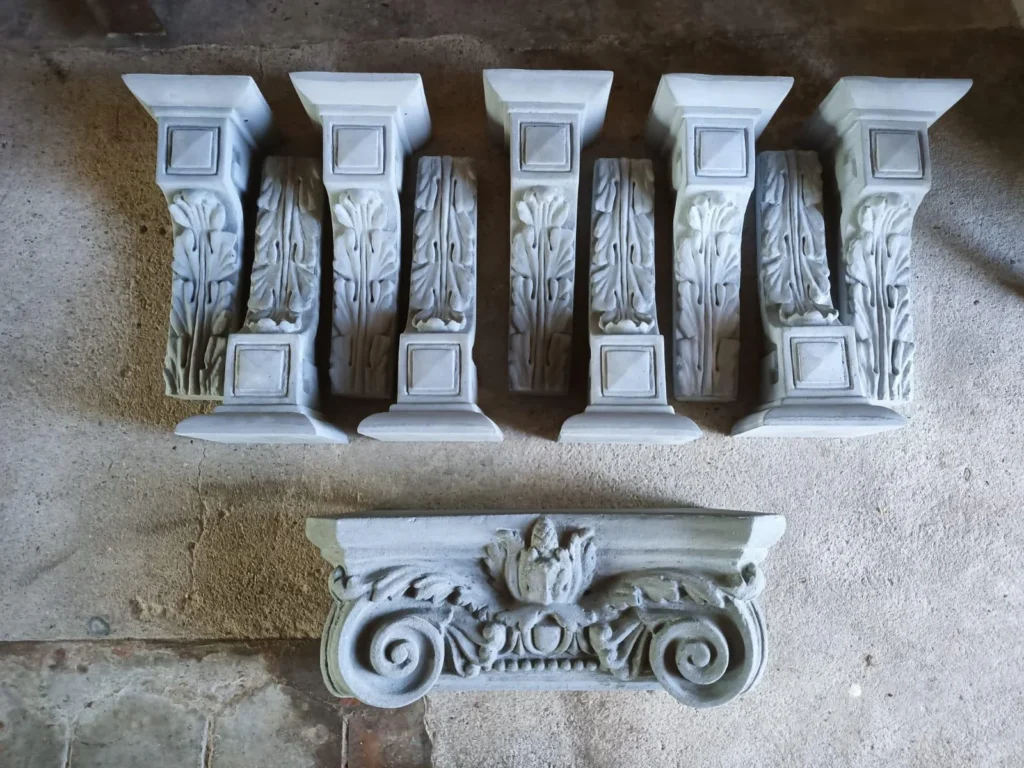
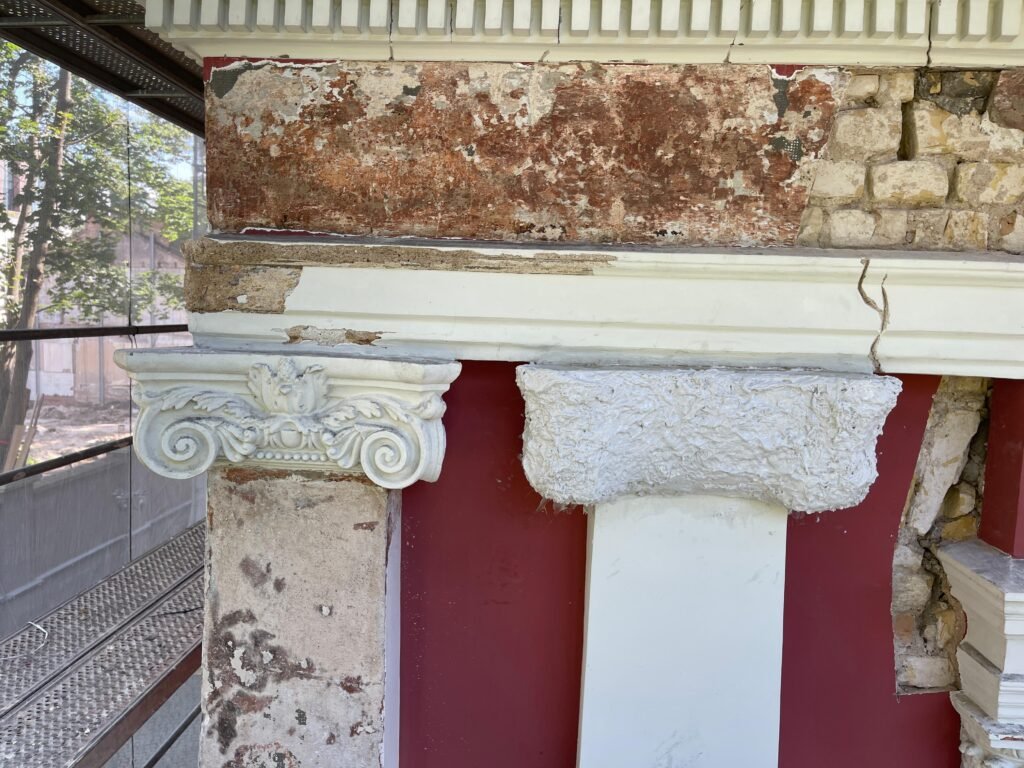
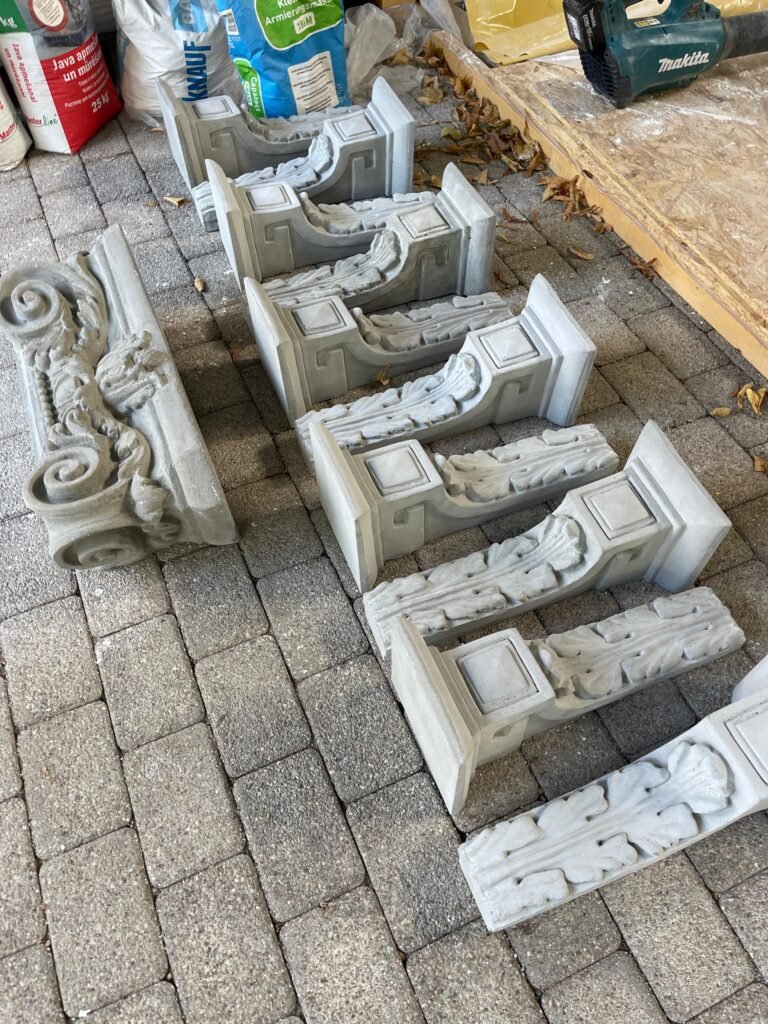
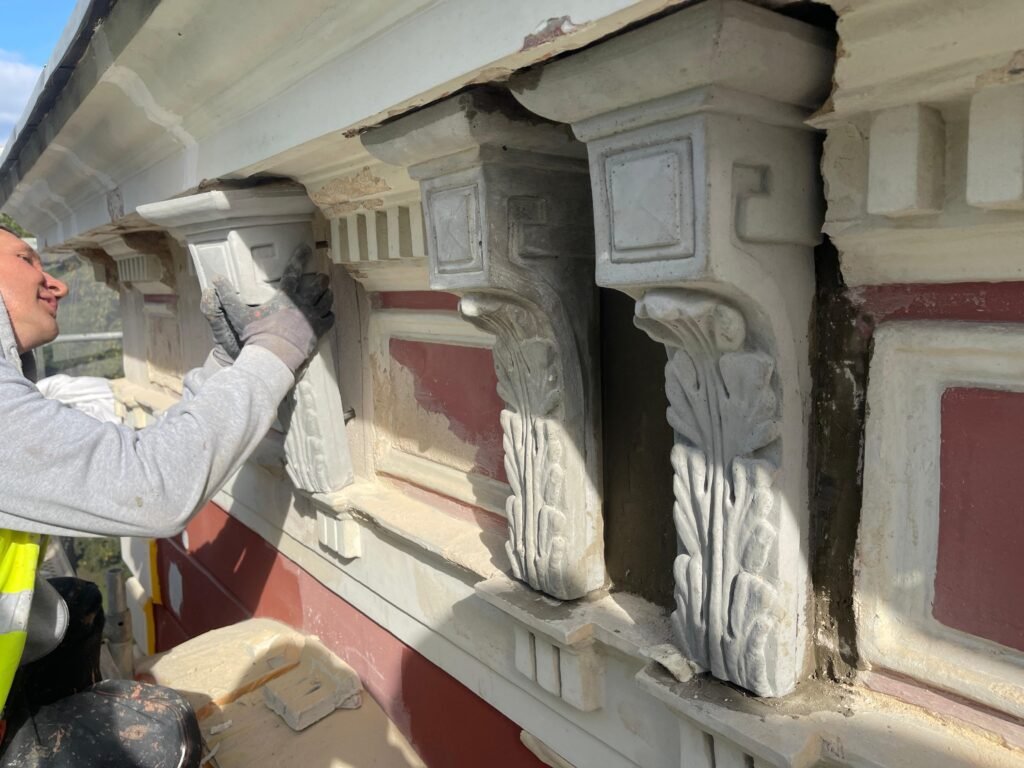
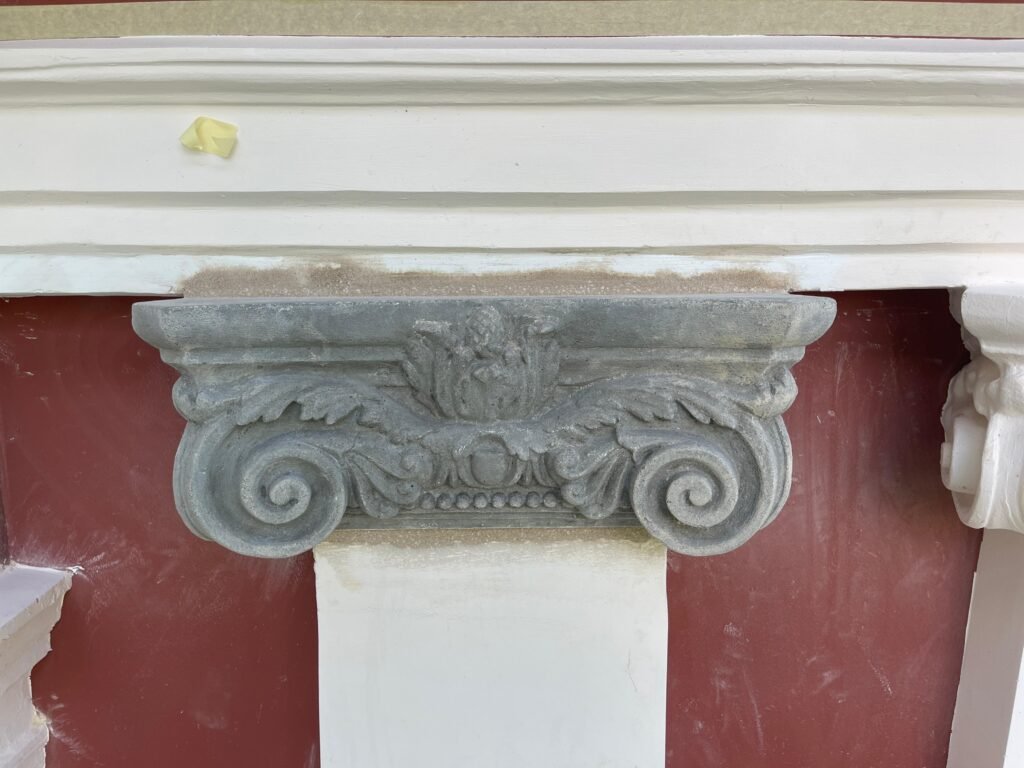
Decorative façade corbels and a capital before installation.
How a silicone mould and plaster shell work
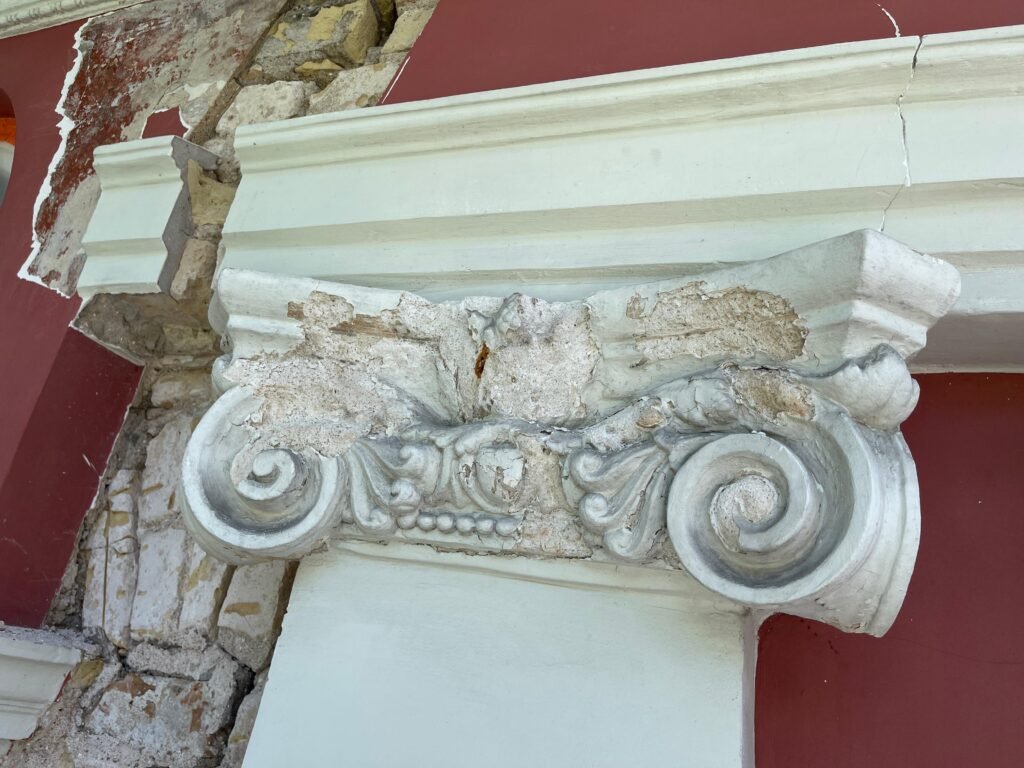
A surviving original can serve as a model for missing capitals, corbels, cornices and ornaments. Flexible silicone captures the relief. The rigid shell preserves the mould’s shape during casting. Plaster can support the mould while the final casting uses the material specified for the façade.
1. Prepare the original detail
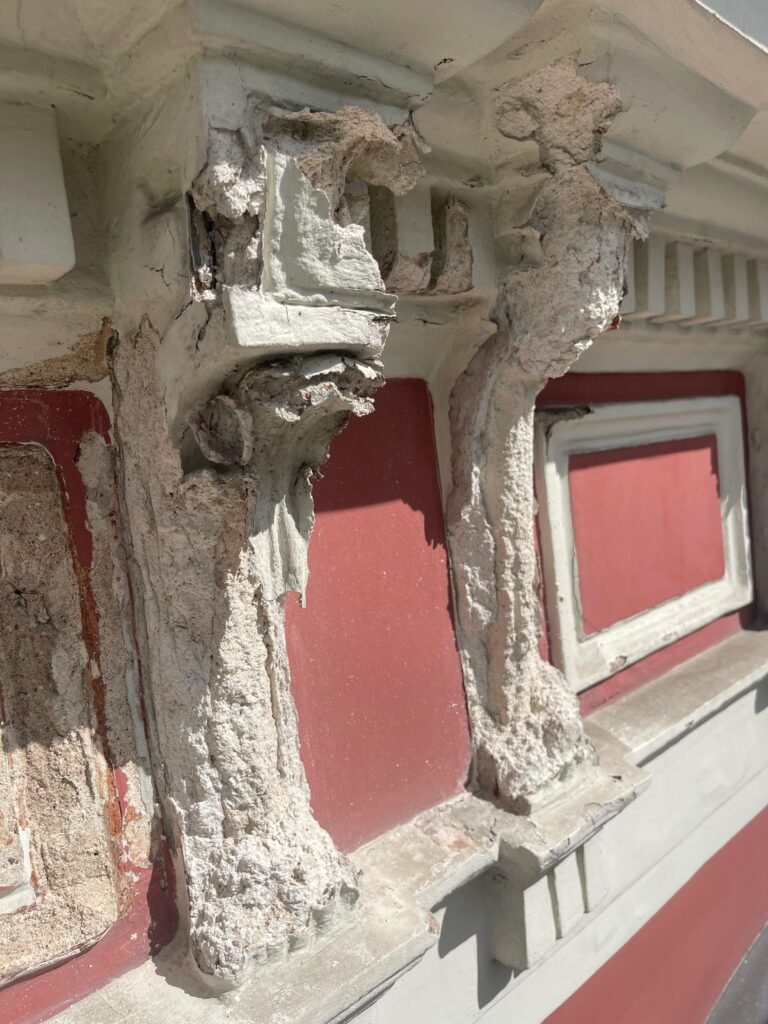
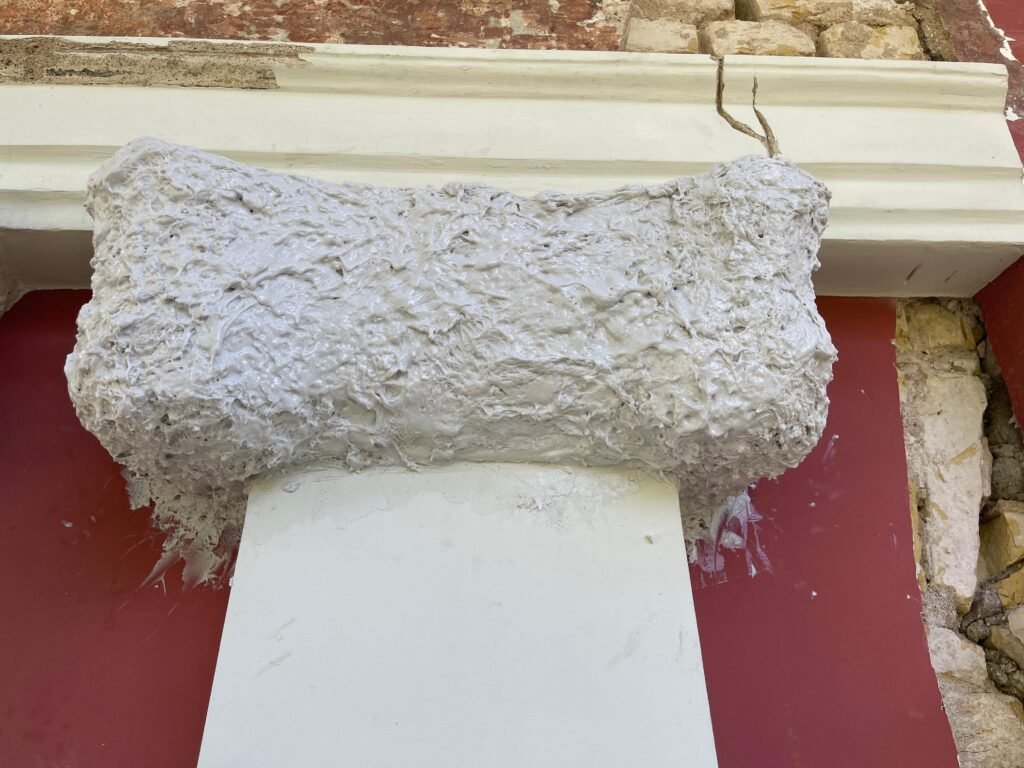
Select the best-preserved detail, photograph it and record its dimensions. Check that the substrate is stable. Choose cleaning and stabilisation methods suited to the original material. Decide whether to correct cracks, losses and paint build-up in a separate working model.
2. Plan the mould divisions
Work out how the silicone and rigid shell will be released. Deep recesses and three-dimensional details may need a multipart mould. Arrange the divisions so parts clear projecting ornament and add registration keys so the parts return to the same position.
3. Make the silicone impression
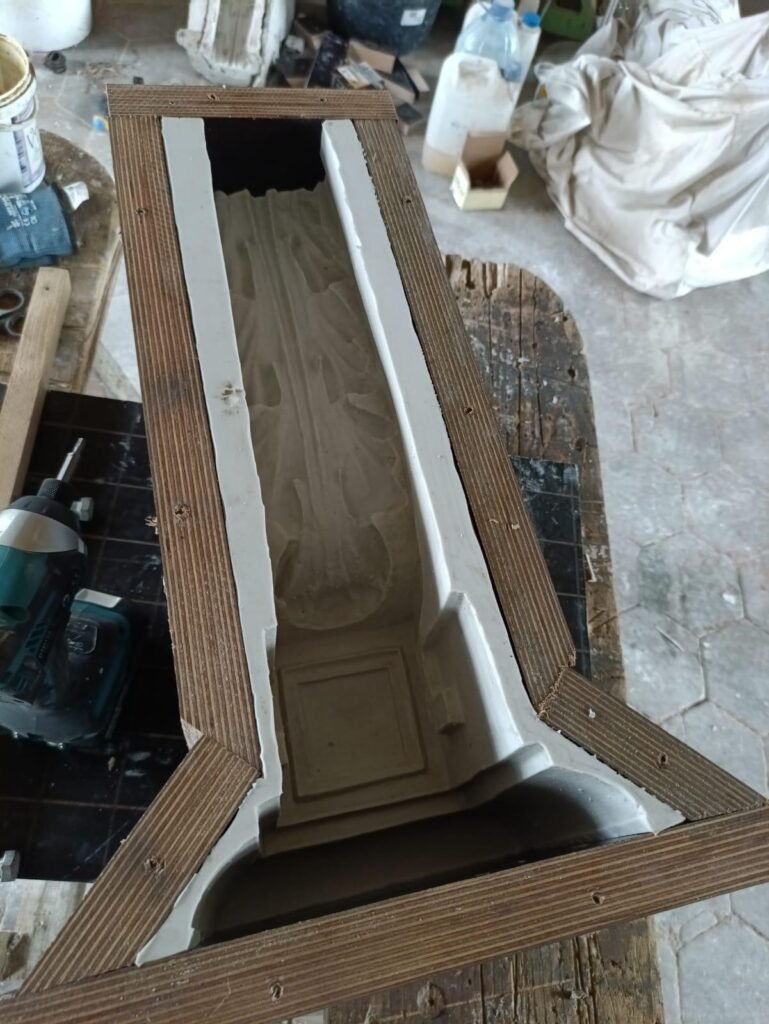
Use a two-part mould-making silicone. Test its cure, release and compatibility with the substrate, barrier coat and release agent. Work a thin first coat into the details and avoid trapped air. Build up the thickness according to the product instructions. Use a non-sag mix or approved thickener on vertical surfaces.
4. Make the rigid support shell
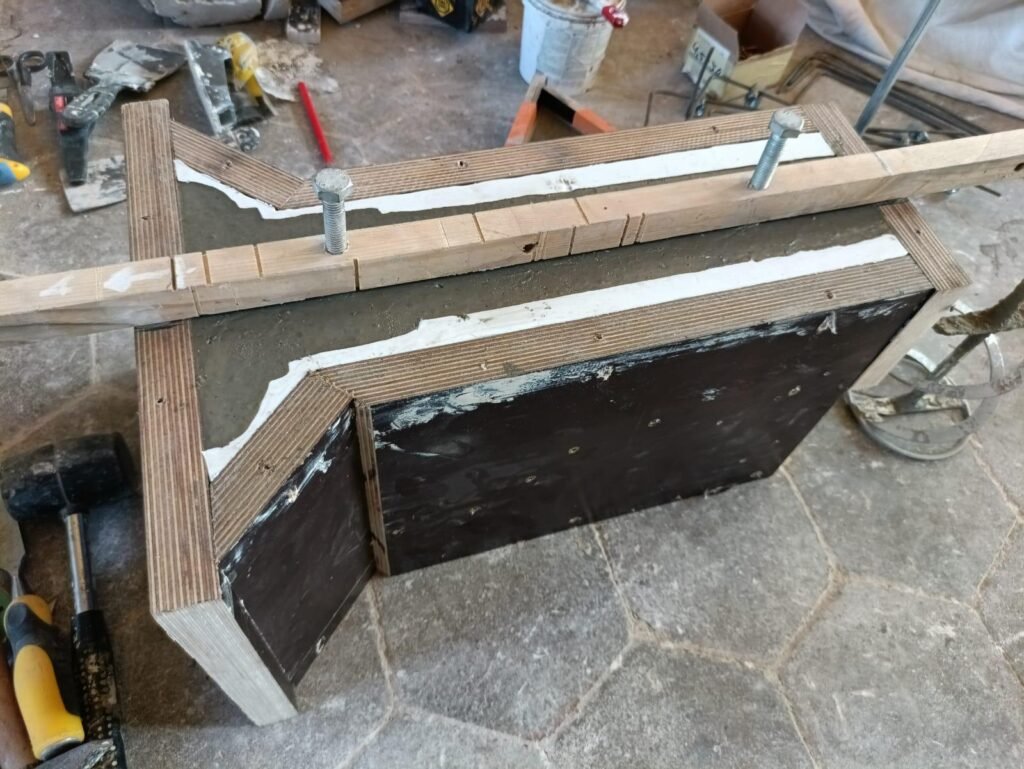
Apply the rigid plaster shell over the cured silicone. Divide complex shells into removable sections with flanges and registration keys. The shell should prevent the mould from distorting when filled. Large moulds can use a reinforced composite shell designed for their size and load.
5. Release the impression
Remove the rigid shell sections first. Peel the silicone slowly away from the original, taking care around deep recesses.
6. Assemble and secure the mould
Refit the silicone in its shell, close the sections and check the keys. Secure the assembled mould so it cannot move. Ensure the silicone sits without folds. A closed mould needs a filling point and a way for air to escape.
7. Cast the replacement
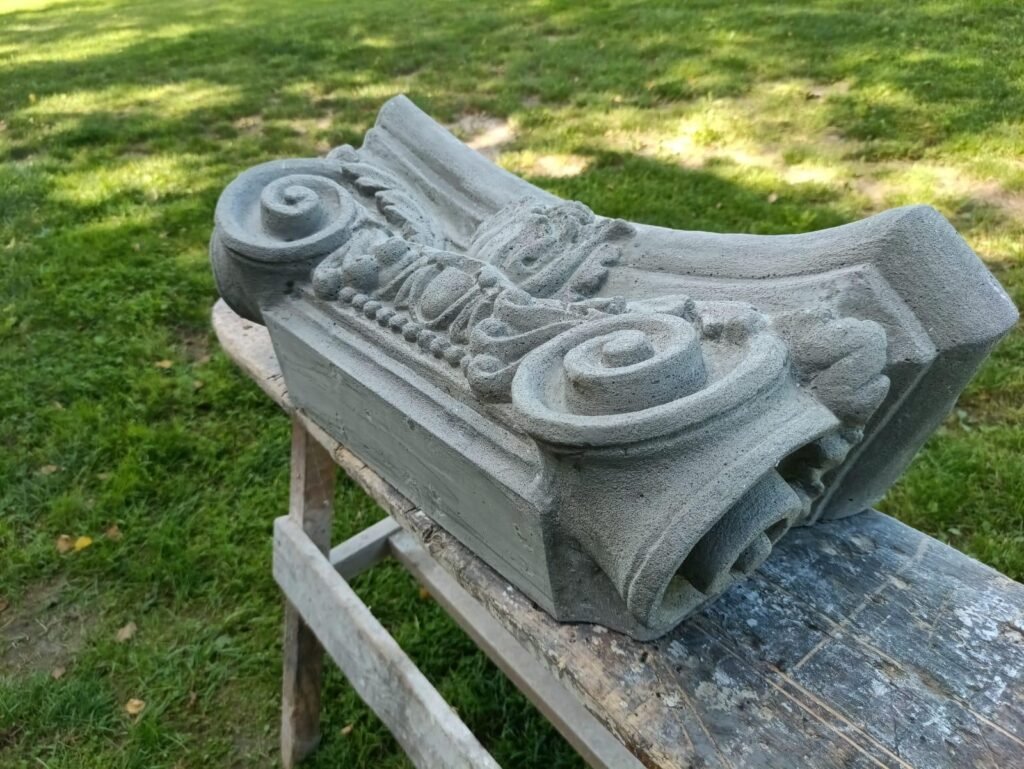
Choose the casting material to suit the original, the dimensions and external exposure. Fill the fine recesses, and make either a solid casting or a shell as designed. Plan reinforcement and fixings before pouring.
8. Release and inspect the casting
After the casting gains sufficient strength, open the shell and peel off the silicone. Check dimensions, accuracy of the relief, air voids and seam marks. Inspect a test casting before producing the full series.
Continue curing and caring for the casting as required. Install it only when it is ready and when the fixings are designed for its weight, substrate and location.